



Setting Up a GCC in Bengaluru: What Should You Get Right Before Your Team Moves In?

Setting up a Global Capability Centre (GCC) in Bengaluru is a major step for any global business. It can bring teams closer to important talent, support innovation, strengthen technology capabilities and create a base for long-term growth in India. But before the first employee walks through the door, there is one decision that deserves more attention than it often receives: choosing the right office and getting it ready for your team.
An office may look impressive during a property visit. It may have a premium address, attractive interiors and enough desks for your initial headcount. But what happens when your team grows faster than expected? Can the workspace support confidential discussions, international video calls, collaboration across departments and the everyday needs of employees? Will the location work for people travelling from different parts of Bengaluru?
These are not questions to postpone until after the team moves in. They should shape your GCC office setup from the beginning.
Bengaluru continues to attract global businesses because of its technology ecosystem, skilled workforce and established corporate presence. Recent industry reporting by JLL has highlighted the city’s position as a major GCC destination, with more than 900 GCC units operating in Bengaluru. This makes the city an attractive option, but it also means businesses need to think carefully about where and how they establish their presence.
At BHIVE, we understand that an enterprise workspace needs to do more than provide desks. It needs to support the way a global team works today while leaving room for tomorrow’s plans. Here is what businesses should get right before moving their GCC team into a new office.
1. Get Your Bengaluru Location Strategy Right
The first big decision is not how the office will look. It is where it should be.
Bengaluru has several established commercial districts, each offering a different combination of business connectivity, surrounding companies, transport access and workplace options. The right location for your GCC depends on your team’s needs, the nature of its work and where your employees are likely to travel from.
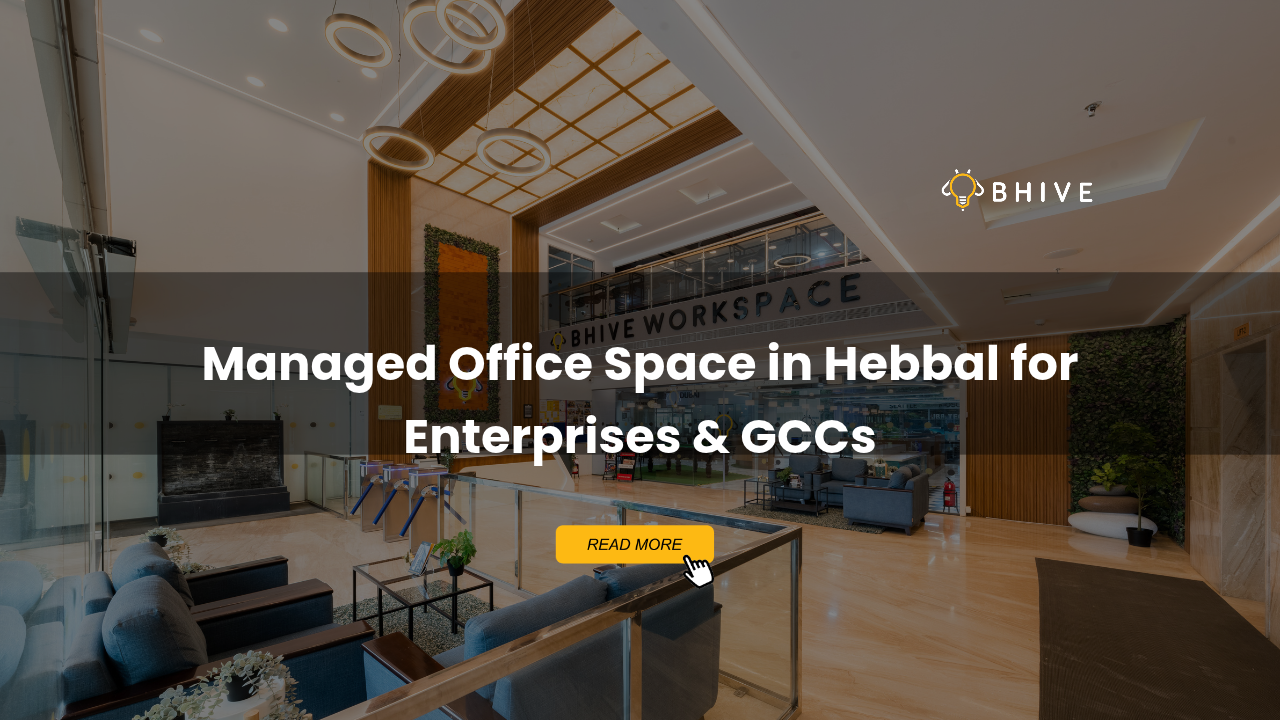
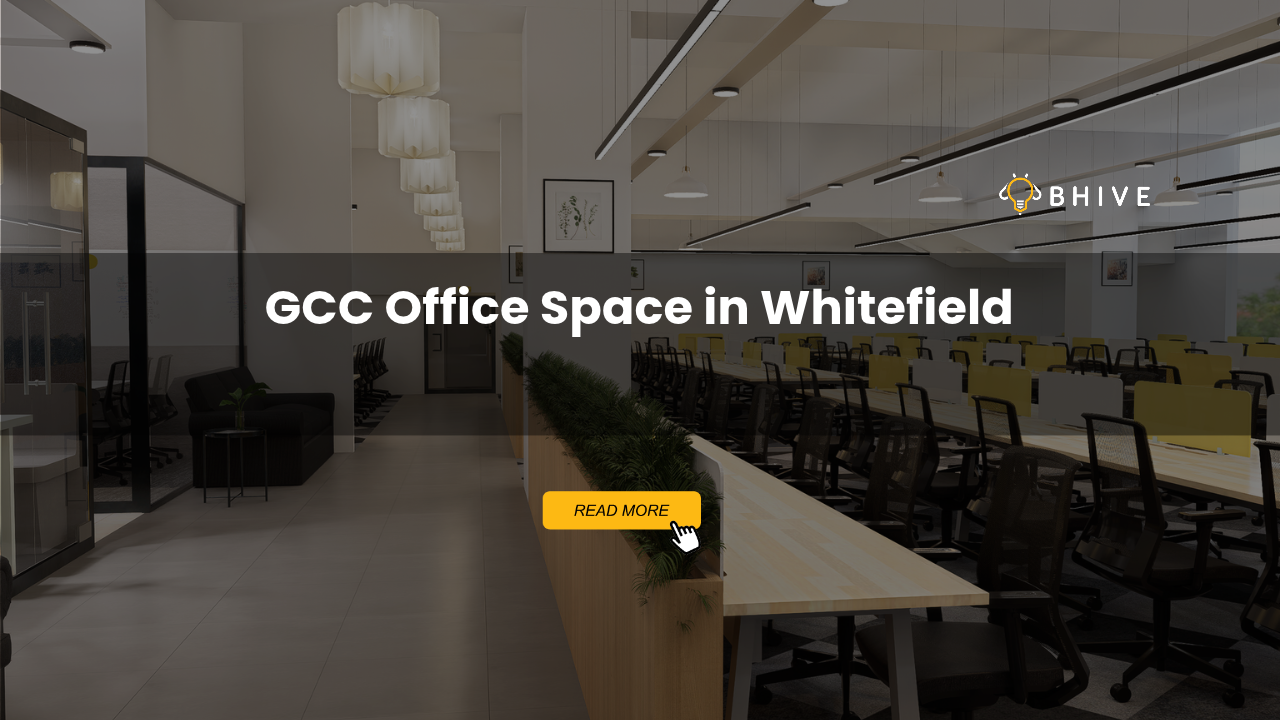
For example, Whitefield and the surrounding eastern business districts may be worth evaluating for companies whose teams, partners or business operations are concentrated in East Bengaluru. Bellandur and the Outer Ring Road corridor may suit businesses looking to operate within a major technology and corporate ecosystem. HSR Layout can be considered by companies that value access to the southern business districts, while Hebbal offers an option for organisations exploring North Bengaluru.
Central Bengaluru locations may also be relevant for businesses that prioritise access to the city’s established commercial areas and client-facing activities.
The point is not to select a location simply because other companies have offices there. A popular business district is useful only when it works for your business.
Start by mapping where your employees live, how they will commute, whether clients or global leaders will visit regularly, and which transport links matter most. Consider the practical journey to the office during normal working hours, not just the distance shown on a map.
At BHIVE, we have workspace options across Bengaluru’s major business districts, including Whitefield, Bellandur, HSR Layout, Hebbal, Koramangala and central Bengaluru. Explore our managed office locations in Bengaluru to compare available properties and identify locations that fit your GCC’s requirements.
2. Choose a Workspace That Can Scale With Your GCC
A GCC rarely remains exactly the same size or serves exactly the same purpose throughout its life. A new centre may begin with a specialised team and gradually take on additional responsibilities, departments or business functions. Hiring plans may also change as the global organisation decides which activities to expand in India.
This makes scalability an important part of your office strategy.
Imagine setting up an office for 100 employees, only to find that you need substantially more space within a year. If the original layout leaves no room for growth, you may have to reorganise the office, search for additional premises or relocate the team. That can introduce avoidable disruption at a time when the business should be focused on building its operations.
Before committing to a workspace, discuss your expected headcount, hiring timeline and potential expansion plans. Consider whether you need a single private office, several connected work areas or a larger enterprise workspace. Think about the departments that may join later and the additional meeting, collaboration or support areas they may require.
The most suitable arrangement should support your current team without making future expansion unnecessarily difficult.
BHIVE’s Enterprise / GCC workspace solutions are designed for businesses looking for enterprise-oriented infrastructure, customisable environments and room to grow. Our GCC workspace solutions provide a starting point for discussing your team’s requirements, preferred locations and potential scale.
Rather than planning only for the day of move-in, plan for what your GCC could look like after its first phase of growth.
3. Look Beyond Desks and Attractive Interiors
A well-designed office is important, but an enterprise workspace needs to function reliably throughout the working day. Before your GCC moves in, evaluate the infrastructure that will support employees, technology and business operations.
Connectivity is an obvious starting point. Teams working across software development, engineering, analytics, research or global business operations may depend on stable internet access and reliable video conferencing. Your IT team should understand the available connectivity arrangements and determine whether they meet the organisation’s technical requirements.
Power availability, backup arrangements, cooling, maintenance processes and building operations also deserve attention. These details may not be the first things you notice during a property tour, but they can have a direct effect on day-to-day work.
The same applies to the physical layout. Does the office have enough meeting rooms for confidential discussions? Can employees collaborate without disturbing colleagues who need quiet working time? Is there room for team discussions, interviews and internal presentations?
At BHIVE, our campus-led workspace proposition brings together enterprise workspaces and shared amenities such as meeting rooms, cafés, recreational areas and other facilities, depending on the property. These can help create a more complete workplace experience than a desk-only arrangement.
Before signing an agreement, discuss your specific technical and operational requirements with the workspace provider. Enterprise needs can vary considerably, so do not assume that every property includes the same infrastructure or facilities.
4. Make Security and Access Requirements Part of the Planning
For a GCC handling sensitive company information, security cannot be treated as a last-minute checklist item.
Different teams may work with confidential product information, customer data, internal financial documents, intellectual property or other business-critical material. Your organisation may therefore have requirements around physical access, visitor management, network controls, private working areas and internal policies.
The exact requirements will depend on your business, industry, clients and global security standards. A technology team working on proprietary products may have different needs from a team focused on finance, customer support or business operations.
Before selecting an office, involve your IT, information security, facilities and compliance stakeholders in the discussion. Identify which requirements must be met before employees can begin working and which facilities or arrangements need to be customised.
Ask the workspace provider how access is managed, what physical security measures are available and whether the space can accommodate the controls your organisation requires. Your internal security team should verify whether the proposed setup meets company policies and any applicable regulatory obligations.
At BHIVE, our enterprise workspace discussions are tailored to the requirements of the business. If your GCC needs private suites, a customised layout or specific operational arrangements, share those needs early so that the suitability of the proposed workspace can be evaluated before the move.
Remember that a professional-looking office is not automatically a compliant office. Security and compliance requirements must be assessed against the actual space, systems and operating model.
5. Calculate the Total Cost of Setting Up and Running the Office
An office budget can look manageable until the smaller expenses begin to add up.
When comparing a traditional commercial lease with a managed workspace, avoid looking at the headline rent alone. Consider the complete cost of getting the office operational and maintaining it over time.
A conventional setup may involve interior design, furniture, internet connectivity, electrical work, facility management, housekeeping, maintenance and other operational requirements. Depending on the building and agreement, there may also be deposits, fit-out expenses and additional costs for utilities or services.
A managed workspace may bring several workspace and operational services together under an agreed commercial structure. This can make costs easier to evaluate, but the precise inclusions depend on the provider, property and contract.
Your finance and procurement teams should compare like with like. Review the total expected expenditure, payment terms, included services, additional charges, agreement duration and any costs associated with expansion or exit.
At BHIVE, our enterprise and GCC workspace offering includes a value-based pricing proposition intended to simplify workspace cost management. The right solution will depend on your team size, location, customisation requirements and commercial terms.
If you are evaluating options, connect with BHIVE about enterprise and GCC workspaces to discuss your requirements and request relevant commercial details.
The objective is not simply to find the cheapest office. It is to understand what you are paying for, which responsibilities your organisation will retain and how the arrangement supports your long-term operating plan.
6. Design the Workplace Around Employee Experience
Your GCC’s performance depends on the people working in it. That is why employee experience should be part of office planning from day one.
A convenient commute, comfortable working areas, suitable meeting spaces and places to take breaks can influence how employees experience the workplace. These details become particularly important when a GCC is hiring new teams or bringing employees together from different business functions.
Consider the full working day. Can employees move between focused work and team collaboration without difficulty? Are there comfortable areas for informal conversations? Can teams conduct meetings without competing for limited space? Are essential facilities accessible and easy to use?
The surrounding location also matters. Transport access, nearby food options and the overall convenience of the area can shape how practical the office feels for employees.
BHIVE’s campus-led workspace approach brings together workspaces and amenities that can include cafés, meeting rooms, recreational zones, sports facilities and shower rooms, depending on the property. These features can support a broader workplace experience while giving employees opportunities to collaborate and take breaks during the day.
However, the availability of each amenity varies by location. During a property visit, assess the actual facilities at the centre you are considering and compare them with your team’s needs.
An office should work for the business, but it should also work for the people who come into it every day.
7. Evaluate the Agreement Before Your Team Moves In
A workspace can meet your location, design and infrastructure needs and still be the wrong choice if the agreement does not support your business plans.
Before signing, understand the commercial terms and the responsibilities of both parties. Review the agreement duration, payment schedule, included services, maintenance responsibilities, access arrangements and conditions for making changes to the workspace.
It is equally important to discuss what happens when your business needs change. Can you add seats or request a different layout? What happens if the team grows faster than expected? Are there conditions around extending the agreement, reducing the space or moving to another property?
These questions matter because a GCC’s requirements may evolve as it takes on new projects and responsibilities. The workspace arrangement should be understood in the context of those possibilities.
For customised enterprise offices, make sure the agreed layout, specifications and delivery timelines are documented. Confirm which facilities are included and which requests would involve additional costs or approvals.
BHIVE’s Enterprise / GCC team can discuss workspace requirements and available options based on your organisation’s needs. The final suitability of any arrangement should be assessed against the specific proposal and contract, not just the general description of the service.
A clear agreement helps both sides understand expectations before the team moves in.
8. Build a Realistic Move-In Plan
Choosing an office is only one part of the process. The workspace must also be ready when your team needs it.
A move-in plan should account for the office handover, furniture and layout, IT setup, access arrangements, employee communication and any testing required before operations begin. For a GCC, these activities may involve several internal teams, so responsibilities and timelines need to be clear.
Start by working backwards from the planned move-in date. Identify what must be completed before employees arrive and which tasks depend on approvals, equipment deliveries or third-party support.
Your IT team may need to test connectivity and meeting-room equipment. Facilities teams may need to coordinate seating plans and access. HR and operations teams may need to communicate commute details, entry procedures and the new workplace’s facilities.
It is also useful to have a plan for the first few working days. Employees should know where to report, how to access the office and whom to contact if something is not working as expected.
For a customised workspace, discuss readiness milestones with your provider and make sure the expected delivery dates are documented. A move-in date should be based on the actual readiness of the office, not simply the date you would like operations to begin.
At BHIVE, the aim is to help businesses evaluate workspace options suited to their operational requirements. Discuss your expected timeline early so that the proposed solution can be assessed against your move-in plans.
Why Consider BHIVE for Your GCC Office in Bengaluru?
Setting up a GCC requires several decisions to come together. The location must work for employees and business operations. The workspace must support your technical and operational needs. Costs need to be understood, and the office should be capable of accommodating your plans as the business develops.
At BHIVE, we offer enterprise-oriented workspace solutions for companies looking to establish or expand their GCC presence in Bengaluru. Our portfolio includes locations across business districts such as Whitefield, Bellandur, HSR Layout, Hebbal and central Bengaluru, allowing businesses to explore options based on their location strategy.
Our GCC workspace offering is designed around enterprise requirements, with options for customised workspaces, campus amenities and scalable environments. The specific layout, capacity, amenities, pricing and commercial terms depend on the selected property and proposal.
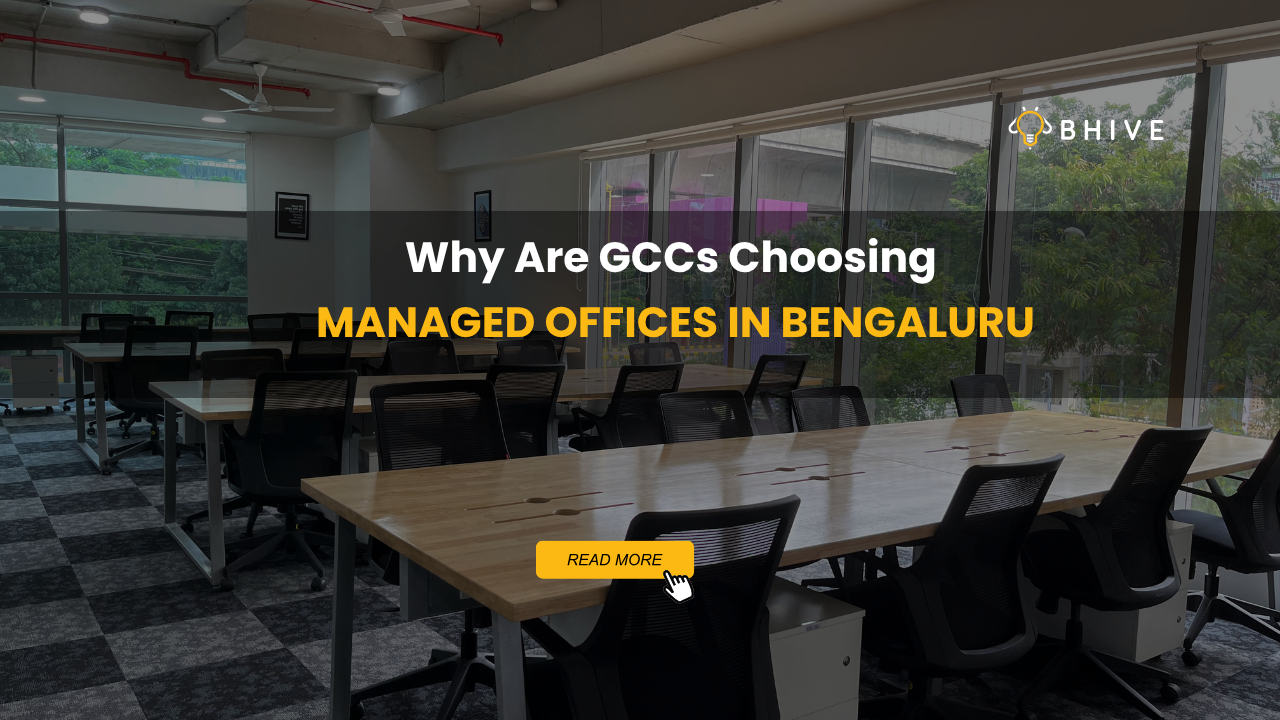
For businesses comparing workspace models, our guide on why GCCs are choosing managed offices in Bengaluru offers further context on how managed workspaces can support enterprise expansion.
The right choice begins with understanding what your GCC needs today and what it may need in the years ahead.
Conclusion: Get the Workspace Right Before the First Day
Setting up a GCC in Bengaluru is about more than finding a building with enough seats. It is about choosing a location that works for your people, infrastructure that supports your operations, an environment that respects your security requirements and a workspace arrangement that makes sense for your business plans.
Before your team moves in, take the time to assess scalability, total operating costs, employee experience, agreement terms and move-in readiness. These decisions can help reduce avoidable disruption and give your GCC a stronger foundation for its next phase of growth.
At BHIVE, we work with businesses exploring enterprise and GCC workspace requirements in Bengaluru. Whether you are establishing a new India operation or planning to expand an existing team, our team can help you explore suitable workspace options based on your location, capacity and operational needs.
Planning your GCC office in Bengaluru? Explore BHIVE’s Enterprise / GCC workspace solutions and connect with our team to discuss a workspace built around your business requirements.
Bengaluru has an established technology and corporate ecosystem, access to skilled professionals and a strong presence of companies working across technology, engineering, research and business operations. These factors make it an important destination for global businesses establishing or expanding their capability centres in India.
Companies should evaluate location and commute access, available workspace capacity, scalability, internet and power infrastructure, security requirements, employee amenities, total operating costs and agreement terms. They should also confirm that the office can be made ready within the planned move-in timeline.
Whitefield, Bellandur and the Outer Ring Road corridor, HSR Layout, Hebbal and central Bengaluru are among the locations businesses can evaluate. The best choice depends on employee commute patterns, talent requirements, business operations, transport connectivity and the availability of suitable workspace.
A traditional lease generally requires the business to coordinate more of its office setup and ongoing operations, depending on the property and agreement. A managed workspace can bring several workspace and operational services together under a defined commercial arrangement. Companies should compare the actual costs, responsibilities, customisation options and contract terms before deciding.
BHIVE offers enterprise and GCC workspace solutions, including customisable workspace options and locations across Bengaluru’s business districts. Companies can discuss their team size, preferred location, infrastructure requirements and expansion plans with the BHIVE team to explore a suitable workspace proposal.


Table of Content
- 1. Get Your Bengaluru Location Strategy Right
- 2. Choose a Workspace That Can Scale With Your GCC
- 3. Look Beyond Desks and Attractive Interiors
- 4. Make Security and Access Requirements Part of the Planning
- 5. Calculate the Total Cost of Setting Up and Running the Office
- 6. Design the Workplace Around Employee Experience
- 7. Evaluate the Agreement Before Your Team Moves In
- 8. Build a Realistic Move-In Plan
- Why Consider BHIVE for Your GCC Office in Bengaluru?
- Conclusion: Get the Workspace Right Before the First Day