


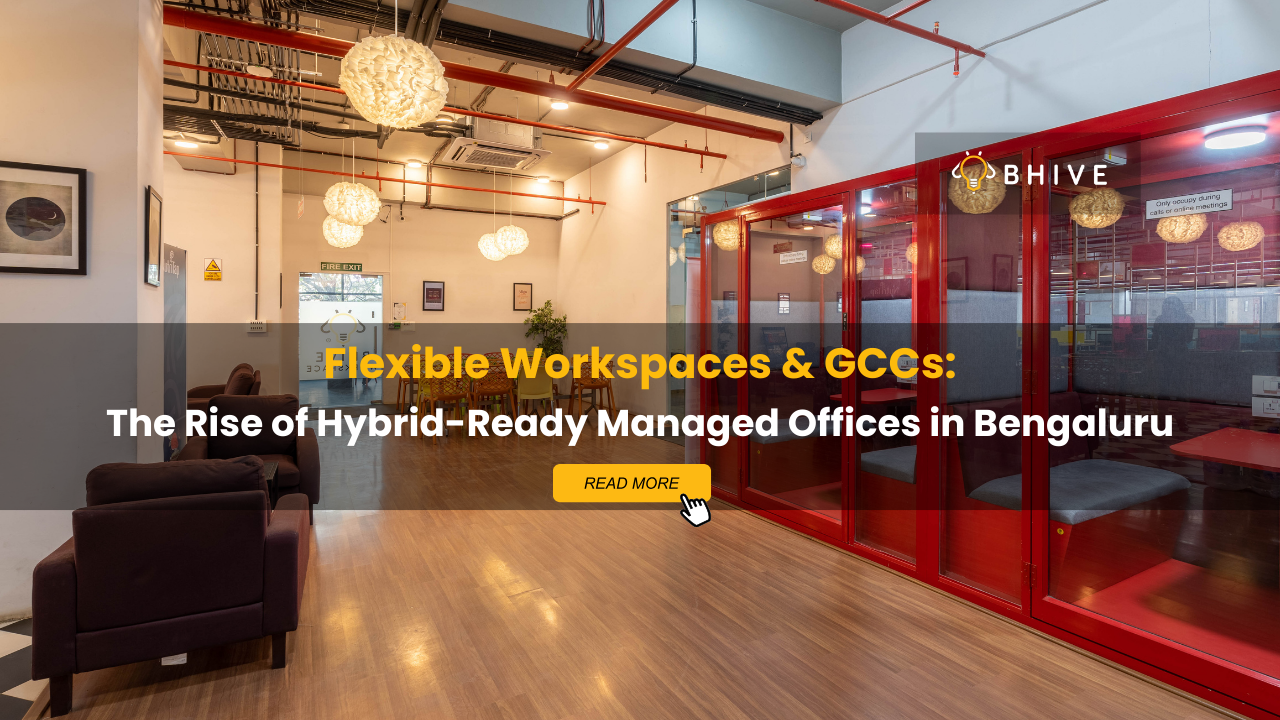
Flexible Workspaces & GCCs: The Rise of Hybrid-Ready Managed Offices in Bengaluru
Flexible workspaces are no longer a “nice to have” for Global Capability Centres (GCCs). They have become a core part of how GCCs think about scale, talent, cost, and long-term growth. As hybrid work models mature, office decisions are shifting away from rigid, long-lease setups toward spaces that can adapt quickly to changing team sizes, functions, and business priorities.
For GCCs in India, especially in technology hubs like Bengaluru, this shift is even more pronounced. Leaders are asking sharper questions today: How much office space do we really need? Where should it be located for maximum talent access? How fast can we scale up or down? Flexible and managed office solutions are emerging as the answer to many of these questions.
Hybrid strategies are shaping not just how often teams come to office, but what kind of office they come to. The modern GCC office must support collaboration, security, performance, and culture, without locking businesses into inflexible real estate decisions. This is where managed offices, particularly in well-connected micro-markets like BTM Layout and Silk Board, are gaining strong traction.
Understanding the GCC Evolution in India
Global Capability Centres in India have evolved far beyond backend support units. Today’s GCCs handle product engineering, AI and data science, cybersecurity, finance transformation, and global operations leadership. With this evolution, expectations from office infrastructure have changed significantly.
Earlier, large campuses with long lock-ins were the default choice. Now, GCCs are prioritising:
- Speed to market
- Operational agility
- Employee experience
- Cost predictability
Hybrid work has accelerated this transformation. GCC leaders want offices that enable collaboration when teams meet, without paying for unused desks every day. This has pushed demand toward flexible office solutions and managed offices that offer enterprise-grade infrastructure with built-in adaptability.
Why Hybrid Work Is the Preferred Model for GCCs
Hybrid work works particularly well for GCCs because it balances structure with flexibility. Most GCC functions benefit from in-person collaboration but do not require teams to be physically present five days a week.
Key drivers behind hybrid adoption include:
- Access to wider talent pools beyond a single commute radius
- Reduced real estate overheads
- Higher employee satisfaction and retention
- Ability to scale teams incrementally
Hybrid models demand offices that are designed for intentional presence, spaces people come to for collaboration, decision-making, and culture building. This changes how offices are planned, sized, and operated.
Suggested Read: GCC Expansion in India: Key Forecasts, Trends & Growth Outlook for 2026 & Beyond
The Rise of Managed Offices for GCCs
Managed offices have become a preferred solution for GCCs navigating hybrid work. Unlike traditional office leases, managed offices offer fully serviced, customisable spaces with predictable costs and faster setup timelines.
For GCCs, managed offices solve several operational challenges:
- No upfront capital expenditure on fit-outs
- Faster go-live timelines
- Flexibility to expand or contract space
- End-to-end management
This model is particularly attractive for GCCs entering new markets, setting up pilot teams, or expanding existing operations without disrupting business continuity.
Why Location Matters in a Hybrid World
Even with hybrid work, location remains a critical decision factor. GCCs are increasingly choosing micro-markets that offer strong connectivity, access to talent, and supporting social infrastructure.
BTM Layout and the Silk Board corridor in Bengaluru have emerged as high-demand zones for this reason. These areas sit at the intersection of key residential clusters, IT corridors, and arterial roads, making them accessible for distributed teams.
When GCCs search for office space for rent in BTM or near Silk Board, they are looking for:
- Reduced commute friction
- Seamless connectivity to HSR, Koramangala, Electronic City, and Outer Ring Road
- Established commercial infrastructure
BTM Layout as a GCC-Friendly Business District
BTM Layout has steadily transformed into a strategic office destination. Its proximity to Silk Board makes it a natural choice for companies that want access to multiple parts of Bengaluru without committing to high-congestion zones.
From a GCC perspective, BTM Layout offers:
- Strong talent accessibility from South and Central Bengaluru
- Well-developed road connectivity
- Availability of flexible office formats
- Competitive rentals compared to core CBD areas
This has driven increased interest in managed offices in BTM and flexible offices in BTM Layout, especially among mid-to-large GCC teams.
What GCCs Look for in a Modern Managed Office
The expectations from managed offices have evolved. GCCs today expect more than just desks and meeting rooms. They need environments that support productivity, security, and brand identity.
Key requirements include:
- Customisable layouts aligned to team workflows
- Enterprise-grade IT and security infrastructure
- Dedicated meeting, collaboration, and recreational zones
- Compliance readiness for global standards
- Professional on-ground operations teams
Managed offices that can deliver on these fronts become long-term strategic partners, not just real estate providers.
How BHIVE Managed Offices Fit into GCC Hybrid Strategy
BHIVE has built its managed office offering around the needs of modern enterprises and GCCs. The focus is on combining flexibility with structure, which allows teams to scale without friction while maintaining a consistent workplace experience.
BHIVE managed offices are designed to support:
- Hybrid team structures
- Fast-growing GCC operations
- Secure, enterprise-ready environments
- Long-term scalability
For GCCs evaluating office space in Bengaluru, this model reduces operational complexity while offering the control and exclusivity enterprises require.
Suggested Read: Bengaluru’s Reign as India’s Top GCC Destination & the Rise of GCC-Ready Workspaces
Garuda BHIVE Workspace BTM Layout Campus
Garuda BHIVE Workspace BTM Layout Campus is a strong example of how managed offices can support GCC growth in a hybrid environment. Located strategically in BTM Layout, the campus is designed to meet the demands of large, performance-driven teams.
This campus stands out for its:
- Campus-style planning suitable for growing GCC teams
- Seamless access to Silk Board and surrounding business districts
- Purpose-built managed office infrastructure
- Ability to support both anchor teams and phased expansion
For firms and enterprises searching for a GCC office space in BTM, this location offers a practical balance between accessibility, scalability, and operational readiness.
Designed for Scale, Built for Flexibility
The Garuda BHIVE Workspace BTM Layout Campus is structured to support hybrid work without compromising on collaboration. Teams can come together for critical work while maintaining flexibility in attendance and space utilisation.
Notable features include:
- Dedicated private cabins with customisable layouts
- Meeting and recreational zones
- Professional common areas that support team interaction
- Infrastructure designed for enterprise IT and security needs
This makes it suitable for GCCs setting up new teams as well as those consolidating distributed operations into a single hub.
Cost Predictability & Operational Ease
One of the biggest advantages of managed offices for GCCs is cost clarity. Traditional leases often come with hidden operational overheads, maintenance challenges, and long lock-ins.
BHIVE managed offices offer:
- Transparent, predictable pricing
- Zero CapEx, single billing
- Single-point, end-to-end operational management
- Reduced administrative overhead
- Faster readiness compared to conventional setups
For GCC leaders, this simplifies budgeting and allows greater focus on core business outcomes.
Why GCCs Are Choosing Managed Offices in BTM Layout
The demand for managed offices in BTM is growing as more GCCs recognise the value of location-plus-flexibility. BTM Layout offers the right balance of connectivity and cost efficiency, while managed offices remove the friction of traditional real estate management.
Key reasons include:
- Proximity to Silk Board and major IT corridors
- Easier access for hybrid teams
- Faster setup and expansion options
- Enterprise-ready infrastructure
This combination makes BTM Layout a practical and strategic choice for GCC office planning.
Future Outlook: Hybrid, Flexible & Location-Smart
Hybrid work is not a temporary trend. It is reshaping how GCCs think about offices as long-term assets. The focus is shifting toward spaces that can evolve alongside business needs.
Going forward, GCC office decisions will prioritise:
- Flexibility over fixed capacity
- Experience over square footage
- Strategic locations over prestigious addresses
Managed offices in well-connected zones like BTM Layout are well-positioned to support this shift.
Conclusion: Aligning Office Strategy with GCC Growth
Flexible workspaces and hybrid strategies are fundamentally changing how GCCs approach office decisions. The need for agility, scalability, and employee-centric design has made managed offices a preferred choice for many enterprises.
With its strategic location, enterprise-ready infrastructure, and flexible managed office model, Garuda BHIVE Workspace BTM Layout Campus offers a compelling solution for GCCs looking to build or expand their presence in Bengaluru. For organisations evaluating office space for rent in BTM or near Silk Board, it represents a future-ready workspace aligned with modern GCC needs.
Visit the BHIVE website to learn more and take the first step toward building your future-ready India centre.
FAQs
Hybrid work has shifted GCC office decisions from maximising seat count to optimising collaboration and efficiency. Offices are now designed for intentional in-person work, leading many GCCs to choose managed and flexible offices that align with hybrid patterns.
Managed offices offer fully serviced, ready-to-use spaces with predictable costs and faster setup timelines. For GCCs, this reduces operational overhead, eliminates fit-out complexity, and provides flexibility.
GCCs should prioritise managed offices that offer customisable layouts, enterprise-grade IT and security infrastructure, professional facilities management, and scalability. Location access, compliance readiness, and operational reliability are also key factors.
Managed offices allow GCCs to expand or contract their office footprint without major disruptions. This flexibility is ideal for GCCs that are onboarding new teams, launching new functions, or adjusting to evolving global business requirements.
Garuda BHIVE Workspace BTM Layout Campus offers a campus-led workspace environment designed for growing GCC teams. It supports hybrid work with scalable office layouts, strong connectivity to Silk Board metro, and enterprise-ready infrastructure built with lifestyle-focused amenities.
Table of Content
- Understanding the GCC Evolution in India
- Why Hybrid Work Is the Preferred Model for GCCs
- The Rise of Managed Offices for GCCs
- Why Location Matters in a Hybrid World
- BTM Layout as a GCC-Friendly Business District
- What GCCs Look for in a Modern Managed Office
- How BHIVE Managed Offices Fit into GCC Hybrid Strategy
- Why GCCs Are Choosing Managed Offices in BTM Layout
- Future Outlook: Hybrid, Flexible & Location-Smart
- Conclusion: Aligning Office Strategy with GCC Growth
- FAQs