


BHIVE’s Campus-led Workspace: Designing Workspaces Around People, Not Just Seats
For decades, the idea of an office was defined by a simple equation: more seats, more productivity. Square footage, desk density, and cost per seat dominated boardroom conversations. But as work itself has evolved, that equation has quietly begun to fail. Today’s workforce values flexibility, wellbeing, connection, and purpose just as much as efficiency. Productivity no longer comes from sitting longer at a desk; it comes from creating an environment where people actually want to show up and do their best work.
This shift is exactly where BHIVE’s campus-led workspace model comes into focus. Instead of designing offices around seats, BHIVE is designing complete ecosystems around people. The result is a new kind of campus-led workspace. One that blends work, movement, recovery, collaboration, and community into a single, seamless experience.
With over 28+ centres across Bengaluru and Mumbai and an inventory of more than 32,000 seats, BHIVE’s transformation is already well underway. What’s even more telling is that just eight of BHIVE’s large-format campuses account for nearly 80% of the total inventory. This is not accidental. It reflects a deliberate belief that the future of office space for rent in Bangalore and beyond lies in campuses, not isolated offices.
This blog explores why BHIVE is shifting toward campus-led workspaces, what truly defines a BHIVE campus, and how this approach supports a healthier, more productive, and more human way of working through BHIVE’s Work Life Harmony model.
Why Traditional Offices Are No Longer Enough
The modern workday has changed dramatically. Hybrid work, distributed teams, and global collaboration have reduced the need for rigid, nine-to-five office routines. Yet many office spaces still operate on outdated assumptions with tight layouts, limited shared areas, and little room for physical or social recharge.
As organisations rethink how and why employees come to the office, a key question emerges: what makes a workplace worth commuting to?
The answer increasingly lies beyond the desk. Employees are looking for workspaces that support their full day, not just their working hours. They want environments that allow them to focus deeply, move freely, connect meaningfully, and recharge without stepping out. This is where the campus-led workspace model becomes not just relevant, but essential.
BHIVE recognised early that simply offering flexible desks or managed offices would not be enough in the long run. To truly support workspace for productivity, the workplace itself needed to evolve into something larger. Something that mirrored how people actually live and work.
What Is a Campus-led Workspace?
A campus-led workspace goes beyond the idea of an office building. It is a thoughtfully designed ecosystem where workspaces coexist with wellness, recreation, and community infrastructure. Instead of treating productivity and wellbeing as separate ideas, the campus model integrates them into a single environment.
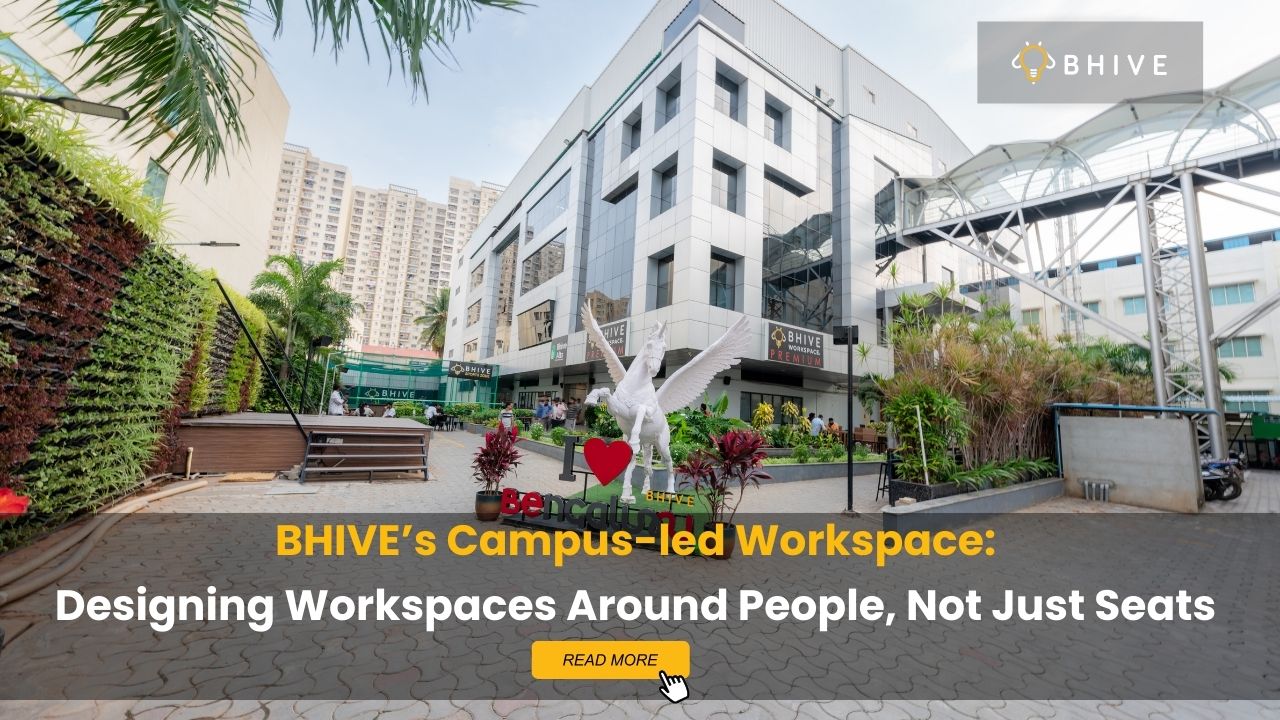
At BHIVE, this means creating large-format campuses that combine premium workspaces with sports facilities, fitness zones, shower areas, social spaces, and curated community experiences. These campuses are designed to support long workdays without burnout and to encourage movement, interaction, and balance throughout the day.
Rather than asking employees to leave the workplace to take care of their physical or social needs, BHIVE campuses bring those elements inside the workspace itself. This shift fundamentally changes how people experience office space for rent in Bangalore, transforming it from a functional necessity into a daily destination.
BHIVE’s Strategic Shift Towards Campus-led Workspaces
BHIVE’s move toward campus-led workspaces is not a branding exercise; it is a strategic response to how demand is shaping up across India’s commercial real estate market. Out of BHIVE’s 28+ centres, eight campuses now house nearly 80% of the company’s 32,000+ seats. This concentration highlights where both enterprise and growth-stage companies are placing their bets.
Large campuses allow BHIVE to deliver consistency at scale. They make it possible to standardise quality, optimise operations, and create richer experiences without fragmenting teams across multiple small locations. For companies, this translates into easier scaling, stronger culture, and a more compelling employee value proposition.
For BHIVE, campuses represent a long-term vision of how workspaces should function and not as isolated units, but as integrated environments that grow with the businesses inside them.
Inside a BHIVE Campus: More Than Just Workspaces
What truly differentiates a BHIVE campus is the ecosystem it offers. While premium desks, private offices, and managed workspaces form the foundation, the experience extends far beyond them.
Many BHIVE campuses include pickleball courts, cricket and football turfs, badminton courts, and dedicated fitness zones. These spaces are not afterthoughts; they are intentionally built to encourage movement and mental reset during the workday. Whether it’s a quick game after meetings or a structured team activity, physical movement becomes part of the daily rhythm.
Complementing these facilities are well-designed shower zones and changing areas. This simple addition removes friction for employees who want to work out, cycle to work, or participate in sports during the day. It signals that fitness is not something to be squeezed in before or after work, it belongs within the workday itself.
Beyond sports and fitness, BHIVE campuses also prioritise social and community spaces. Open lounges, breakout zones, and event areas host networking sessions, workshops, and informal gatherings. These interactions often spark collaboration that wouldn’t happen in a traditional office layout.
Together, these elements transform the campus into a living ecosystem, one that supports focus when needed and connection when it matters most.
The Human Impact of Campus-led Design
Designing workspaces around people rather than seats has a measurable human impact. Employees working out of campus-led workspaces report higher engagement, better work-life balance, and a stronger sense of belonging. The presence of shared amenities and community-driven experiences reduces isolation, especially in hybrid work environments.
From an organisational perspective, campus-led workspaces also strengthen retention. When employees associate the workplace with wellbeing and growth, they are more likely to stay engaged over the long term.
This is why campus-led workspaces are increasingly seen as a powerful lever for productivity. By supporting physical health, social connection, and mental clarity, these environments enable sustained performance rather than short bursts of output.
Linking Campuses to BHIVE’s Work Life Harmony Model
At the heart of BHIVE’s campus strategy is its Work Life Harmony model. Unlike traditional notions of work-life balance, which often imply a trade-off, Work Life Harmony focuses on integration, allowing work and life to coexist more naturally.
The model rests on four key pillars: flexibility, fitness, social connection, and productivity. Campus-led workspaces make each of these pillars tangible.
Flexibility is supported through a mix of workspace formats, enabling teams to scale, adapt, and work on their own terms. Fitness is embedded through sports courts, turfs, and wellness facilities that encourage regular movement. Social connection emerges organically through shared spaces, events, and community initiatives.
By aligning physical infrastructure with human needs, BHIVE campuses bring the Work Life Harmony philosophy to life.
Why Campus-led Workspaces Are the Future of Office Space in Bangalore
Bangalore’s workforce is young, dynamic, and increasingly selective about where and how it works. As companies compete for talent, office space for rent in Bangalore is no longer evaluated on cost alone. Experience, culture, and long-term sustainability now play a decisive role.
Campus-led workspaces address these expectations head-on. They offer companies a ready-made ecosystem that supports growth while enhancing employee satisfaction. For teams looking to build workspace for productivity without sacrificing wellbeing, campuses provide a compelling alternative to traditional offices.
BHIVE’s growing portfolio of campuses positions it at the forefront of this shift, setting a new benchmark for what modern workspaces can and should offer.
Conclusion: Designing the Future of Work, Today
BHIVE’s campus-led workspace model represents a fundamental rethinking of how offices are designed and experienced. By focusing on people rather than seats, BHIVE has created environments where productivity, well-being, and community reinforce each other.
With eight campuses already housing the majority of its 32,000+ seats, BHIVE’s direction is clear. The future of work lies in ecosystems, not isolated offices.
If you’re exploring office space for rent in Bangalore or searching for a workspace for productivity that truly supports your team, BHIVE’s campus-led workspaces offer a glimpse into what the future looks like.
👉 Explore BHIVE’s campuses and discover a better way to work by visiting the BHIVE website.
A campus-led workspace is a comprehensive work environment that combines offices with wellness, sports, social, and community facilities, creating a holistic ecosystem for employees.
Out of 28+ centres, BHIVE operates eight large-format campuses that account for nearly 80% of its 32,000+ seats.
What amenities are included in BHIVE campuses?
BHIVE campuses include sports facilities such as pickleball courts, cricket and football turfs, badminton courts, fitness zones, shower areas, and community spaces.
By integrating fitness, flexibility, and social interaction into the workday, campus-led workspaces reduce burnout and support sustained productivity.
They are ideal for startups, enterprises, and growing teams looking for office space for rent in Bangalore that supports both per