


BKC Office Spaces Explained: Coworking vs Managed Offices vs Traditional Leasing
Bandra Kurla Complex has quietly become one of the most decisive office markets in India. What was once seen largely as a financial district is now a base for global banks, large enterprises, fast-scaling startups, and leadership teams that want a strong Mumbai presence. But with that prestige comes a practical question that almost every business faces sooner or later: what kind of office space actually makes sense in BKC?
The answer isn’t as obvious as it used to be. Businesses today are no longer choosing between just locations; they’re choosing between formats. Some teams need flexibility because the headcount changes. Others want a branded, private office without the operational burden. And some organisations still prefer the certainty of a long-term lease, even if it comes with higher commitment and cost.
In BKC, where rentals are premium and inventory is limited, this choice has real consequences. What you pick affects how quickly you can move in, how much capital you lock up, how your team works day to day, and how easily you can adapt when plans change. What works for a leadership team of 10 may not work for a growing team of 50, and what feels right today can become restrictive a few years down the line.
Understanding how coworking spaces, managed offices, and traditional leased offices function in this market makes the difference between choosing an office that supports growth and one that quietly slows it down. Each one comes with its own trade-offs, and in a place like BKC, those trade-offs are amplified.
Why BKC Demands a Different Office Decision
BKC is not a forgiving office market. Unlike emerging micro-markets where flexibility is built into pricing and supply, BKC operates on scarcity and premium positioning. Rentals are higher, lock-ins are longer, and moving offices is not something companies do casually.
This makes the choice of office space especially important. In many cases, businesses don’t struggle with whether they should be in BKC, they struggle with how they should be set up once they are there.
Over the last few years, three clear formats have emerged as the dominant options: coworking spaces, managed offices, and traditional leased offices. Each exists for a reason, and each solves a different problem. The challenge is understanding which problem you’re actually trying to solve.
Coworking Spaces in BKC: Flexibility First
Coworking in BKC is often the first entry point for companies testing the waters. It allows teams to access a premium business address without the weight of long-term commitments or high upfront costs.
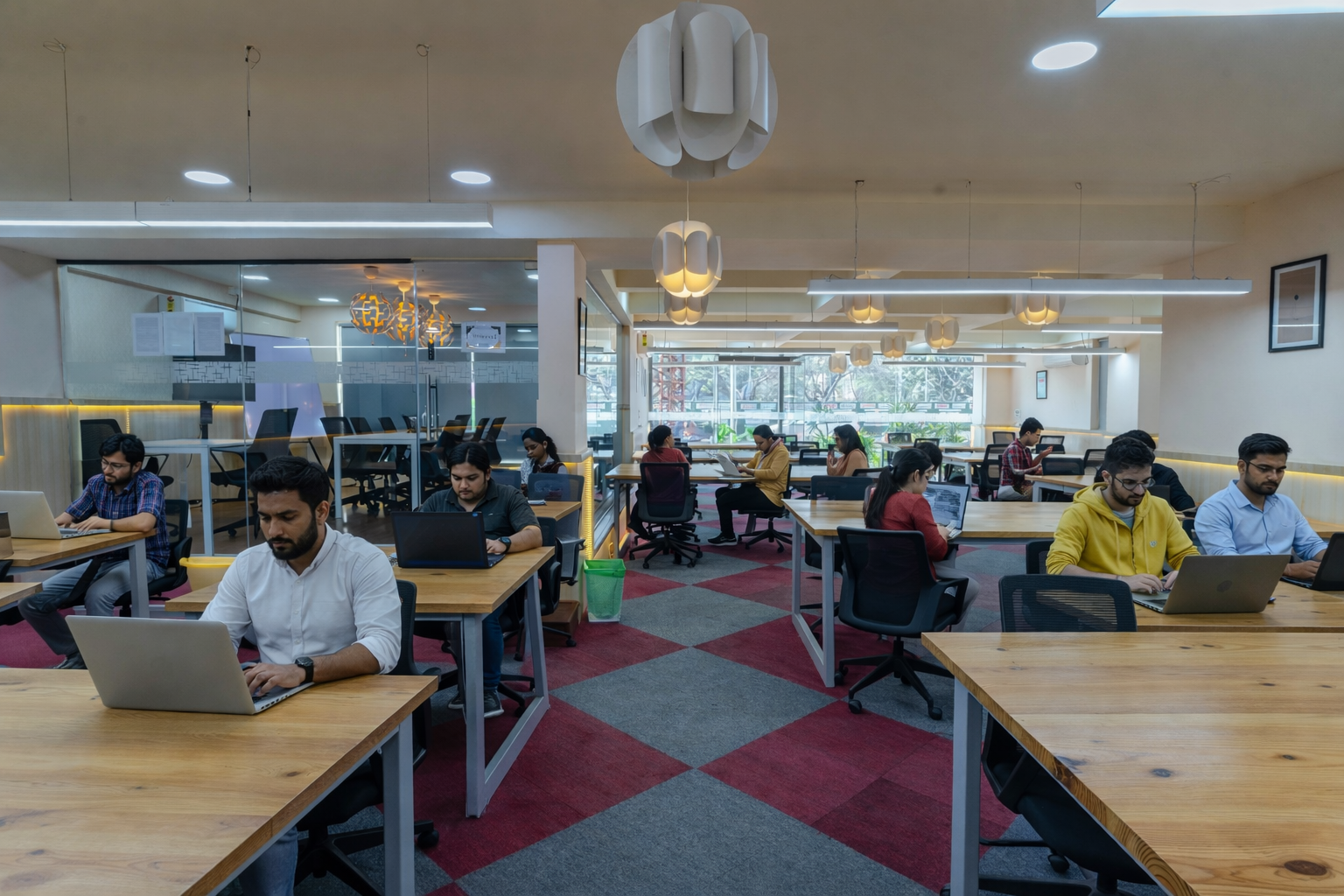
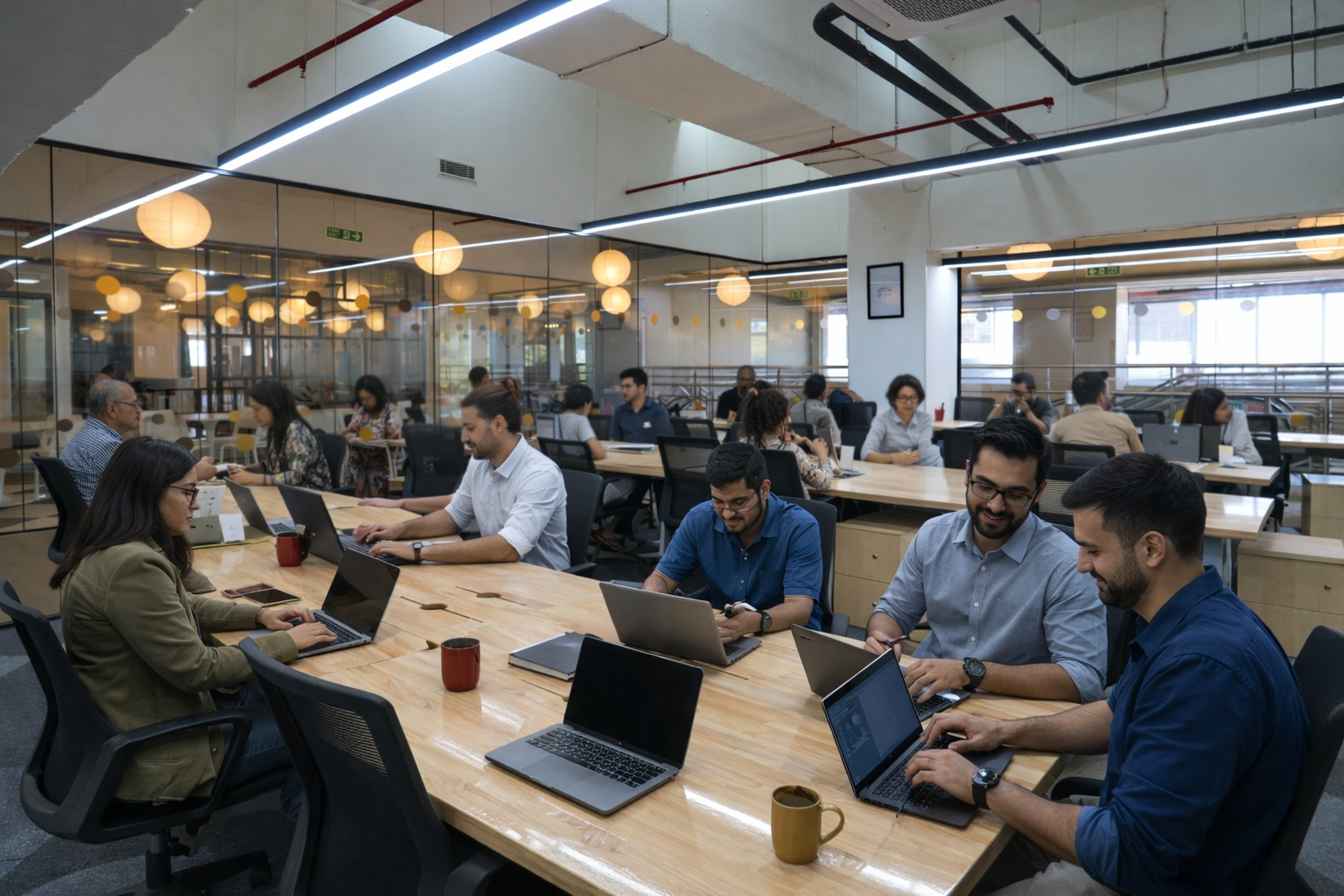
Modern coworking spaces in BKC are far removed from the early idea of shared tables and informal setups. Today, they function much closer to professional offices: offering dedicated desks, private cabins, meeting rooms, IT support, and managed facilities.
For many businesses, coworking is not a compromise; it’s a strategic choice.
Teams that benefit most from coworking in BKC tend to value speed and adaptability. Startups entering Mumbai, leadership teams that need a base, project-driven teams, and hybrid organisations often prefer coworking because it lets them scale up or down without friction.
Another reason coworking works well in BKC is predictability. Monthly pricing usually bundles rent, utilities, internet, housekeeping, and maintenance into one number. In a market where operational costs can escalate quickly, this simplicity matters.
That said, coworking does come with some limitations. Customisation is minimal, branding opportunities are restricted, and larger teams may eventually outgrow the format. For companies that want complete control over layout, access, and identity, coworking can start to feel limiting over time.
This is often where the next format comes into play.
Suggested Read: Why GCCs Choose India & How BHIVE Campuses Help GCCs Succeed
Managed Offices in BKC: Control Without Complexity
Managed offices sit in the middle of the spectrum: between the flexibility of coworking and the rigidity of traditional leasing. They are fully private office spaces, built and operated by a workspace provider, but designed exclusively for one company.
In managed offices in BKC, businesses get their own branded space, dedicated entry, customised interiors, and fixed seating capacity. At the same time, the operational burden of facility management, housekeeping, IT, security, and vendor coordination is handled by the operator.
This model has gained popularity in BKC because it addresses a common frustration. Many companies want a “real office,” but don’t want to deal with long setup timelines, interior CapEx, or the ongoing complexity of running a standalone space.
Managed offices are particularly attractive for growth-stage startups and mid-sized enterprises. These teams are usually large enough to need privacy and branding, but still value flexibility. Lock-ins are typically shorter than traditional leases, and expansions or reconfigurations are easier to manage.
From a cost perspective, managed offices may appear more expensive on a per-seat basis than leasing. But when fit-out costs, delays, and operational overheads are factored in, the difference often narrows down, especially in a premium location like BKC.
The real value lies in focus. Teams can move in faster, operate smoothly, and spend time on business rather than infrastructure.
This is also where campus-led operators like BHIVE have built a strong point of differentiation. While BHIVE’s managed office experience is well established in markets like Bellandur & Whitefield in Bengaluru, the principle translates well to BKC: private offices supported by shared amenities, thoughtful layouts, and operational consistency.
Instead of isolated office floors, the emphasis is on creating environments where teams have privacy when they need it, but still benefit from shared infrastructure that improves everyday work life.
Traditional Leasing in BKC: Long-Term Commitment
Traditional leasing remains the most established form of office space in BKC. It involves renting a bare-shell or warm-shell office directly from a landlord, followed by a full interior fit-out managed by the tenant.
For large enterprises with a stable headcount and long-term certainty, this model still makes sense. It offers complete control over design, branding, access, and usage. Over very long durations, it can also be cost-efficient on a per-square-foot basis.
However, traditional leasing in BKC comes with heavy demands.
Lock-in periods are long, security deposits are high, and fit-out costs can be substantial. Setup timelines often stretch across months, and once the space is built, flexibility is limited. Any change in team size or working model requires fresh investment.
Operational responsibility is another factor. Facility management, vendor coordination, maintenance, and compliance sit entirely with the tenant. For organisations without dedicated real estate or admin teams, this can become a distraction.
In today’s business environment, where teams evolve quickly and work models continue to change, traditional leasing works best only when growth paths are predictable and long-term presence is guaranteed.
Comparing the Three Formats in the BKC Context
The difference between coworking, managed offices, and traditional leasing becomes clearer when viewed through the lens of time, control, and risk.
- Coworking optimises for flexibility. It minimises risk, reduces commitment, and allows companies to enter BKC quickly.
- Managed offices balance flexibility with ownership. They offer a controlled, branded environment without the friction of setup and operations.
- Traditional leasing prioritises permanence. It rewards certainty but penalises change.
In BKC, where business decisions are expensive to reverse, this distinction matters more than in most other markets.
How Businesses Typically Move Between Office Spaces
Interestingly, many companies don’t choose just one format forever. Instead, they move between them as their needs evolve.
A common journey looks like this:
- Coworking as an entry point into BKC
- Transition to a managed office as the team grows
- Traditional leasing once scale and stability are established
This progression allows businesses to align their office strategy with their stage of growth, rather than locking into a format too early.
Workspace operators that understand this journey, rather than pushing a single solution, tend to deliver better long-term value. This is where integrated models, like BHIVE’s coworking and managed office offerings, become relevant. They allow companies to grow within the same ecosystem, rather than resetting their workspace experience every few years.
Suggested Read: Coworking vs. Managed Offices in BKC: Which Workspace Model Is Right for Your Business?
What to Consider Before Choosing Office Space in BKC
Before deciding on any format, businesses should ask a few fundamental questions.
- How stable is your team size over the next two to three years?
- How important is branding and privacy?
- How quickly do you need to be operational?
- How much capital are you willing to lock into real estate?
The answers usually point clearly toward one format over the others.
For many modern businesses, especially in high-cost markets like BKC, flexibility and predictability outweigh ownership. This is why coworking spaces in BKC and managed offices in BKC continue to see strong demand, even as traditional leasing remains relevant for a smaller set of companies.
The Bigger Shift in How Offices Are Viewed
What’s happening in BKC reflects a larger shift in how offices are perceived.
Offices are no longer just assets or addresses. They are operational tools. They influence productivity, culture, hiring, and retention. As a result, businesses are becoming more intentional about how much control they need versus how much flexibility they want.
Models that reduce friction, whether through coworking or managed offices, are not replacing traditional leasing entirely. They are simply giving companies more choice.
And in a market like BKC, where every decision carries weight, having the right choice at the right time can make a measurable difference.
Conclusion
There is no universally “right” office format in BKC. There is only the format that fits your business today and allows you to adapt tomorrow.
- Coworking spaces in BKC make sense when speed and flexibility are critical.
- Managed offices in BKC work best when teams need control without complexity.
- Traditional leasing remains relevant when long-term certainty is already in place.
The smartest office decisions are rarely about prestige. They’re about alignment between space, people, and plans. And in premium business districts like BKC, that alignment matters more than ever.
FAQs
For early-stage and growth-stage startups, coworking spaces in BKC are often the most practical choice. They offer faster move-in, lower upfront costs, and the flexibility to scale teams up or down without long-term commitments. As the team grows and needs more control, many startups later transition into managed offices.
The key difference lies in privacy and customisation. Coworking in BKC typically involves shared infrastructure with limited branding, while managed offices in BKC provide a fully private, branded workspace built specifically for one company. Managed offices offer more control while still handling operations, utilities, and facility management on your behalf.
While managed offices may appear costlier on a per-seat basis, they often become cost-effective when factoring in interior fit-outs, setup timelines, operational overheads, and vendor management. For many businesses, the reduced complexity and faster go-live offset the higher headline cost.
Yes. Many companies follow a natural progression, from coworking to managed offices, as they scale. Workspace providers that offer both formats make this transition smoother, allowing teams to upgrade their space without changing ecosystems or operational standards.
The decision depends on four factors: team size stability, need for branding, speed of setup, and appetite for long-term commitment. Businesses that prioritise flexibility usually choose coworking, those seeking control without hassle opt for managed offices, and companies with long-term certainty prefer traditional leasing.

Table of Content
- Why BKC Demands a Different Office Decision
- Coworking Spaces in BKC: Flexibility First
- Managed Offices in BKC: Control Without Complexity
- Traditional Leasing in BKC: Long-Term Commitment
- Comparing the Three Formats in the BKC Context
- How Businesses Typically Move Between Office Spaces
- What to Consider Before Choosing Office Space in BKC
- The Bigger Shift in How Offices Are Viewed
- Conclusion
- FAQs